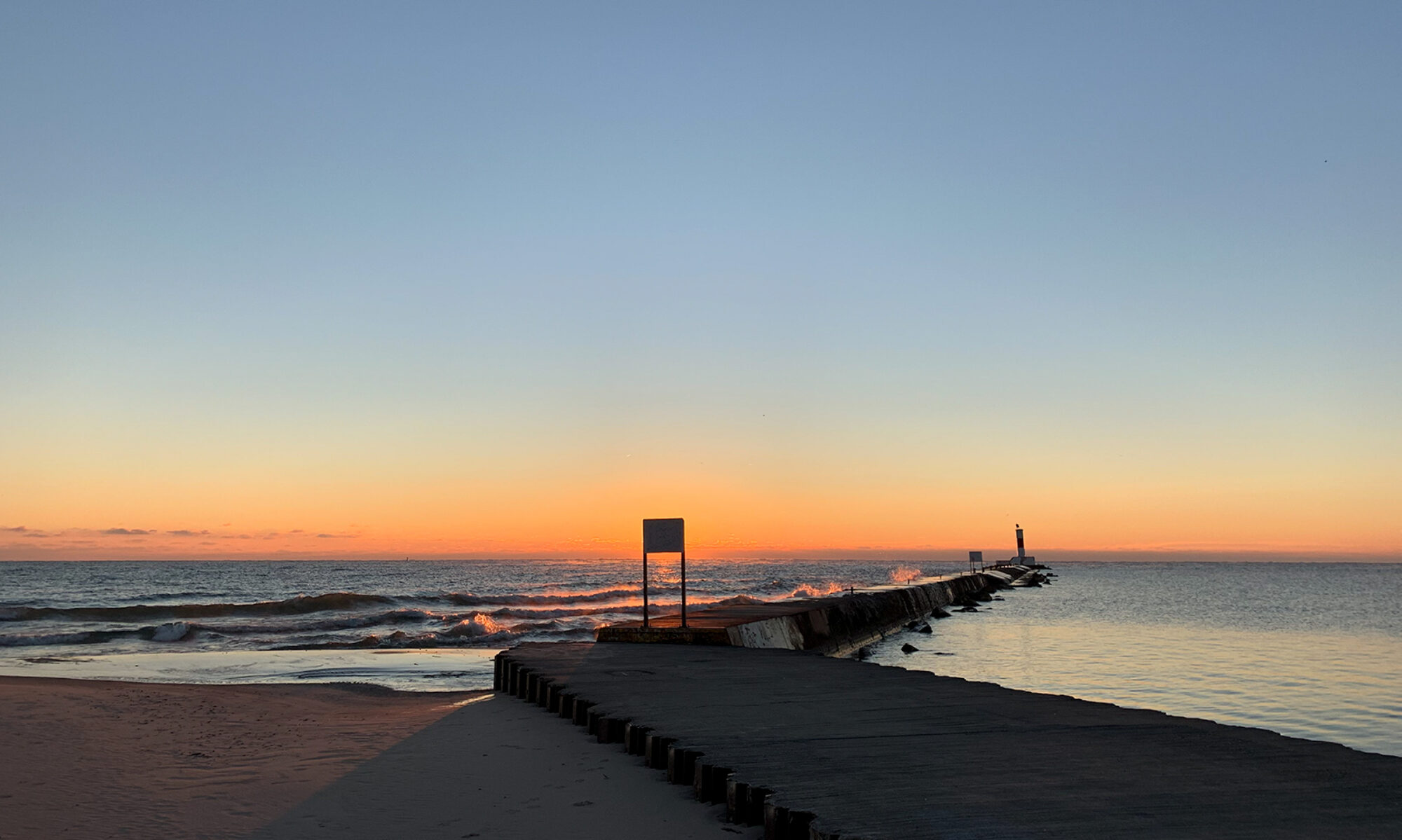
This gull, along with 700 of his friends, has been guarding the Waukegan beach. It’s been difficult to bird the beach without disturbing the gulls or getting in the way of the very vocal Spotted Sandpiper and Killdeer. They seem to have hatched a second clutch and they are very protective of their territory.
Spotted SandpiperKilldeer
Between the dunes there has been a pond stretching the whole length of the beach. This is perfect habitat for the Black-crowned Night Heron and the Green Heron. They can be found early in the morning close to the southern most entrance to the north beach.
Black-crowned Night Heron
The Fourth of July parade was uneventful and mostly boring. Aside from the horses, the best thing was the vintage firetruck.
The city fireworks had been cancelled due to the tragedy in Highland Park, but the neighborhoods west of us provided their own displays. All fireworks have been outlawed in Waukegan but this only reduced the number and firepower we heard by a fraction.
When I got up and went to go birding I realized that the real action was overnight, right in our front yard. As I drove out the driveway I saw a lot of dirt on the driveway right under the magnolia tree. I didn’t think much of it and kept going. A bit later, I thought I needed to investigate more thoroughly. I found the trunk of the tree facing the driveway had it’s bark ripped away and was damaged down to the base. The flower garden was disturbed and my very healthy cactus was gone!! There were tire marks on the neighbor’s lawn that extended through the flower garden and ended at the magnolia tree. There were small plastic and glass shards all over the front yard, especially on the north side on the garden. Finally the neighbors came out and explained what had happened. While we were asleep, a car had spun out of control on Sheridan road, driven through their yard and land with the back of the car crashed into the tree. The police were called, the tow truck removed the car and nobody so much as put a post-it note on our front door. We are still in the process of getting it fixed. This is the second time we had a car in our yard, the second tree damaged and the 7th time a speeding car missed the turn and crashed in this block. We complained to the neighborhood police officer and he said he would try to run s speed check. They are so understaffed that I can’t see that happening enough to make a difference.
I’m sorry to say that the neighborhood news gets worse. The school district has decided to repurpose Lincoln Center as a school for those high school students unable to function in the standard high school environment due to social and mental challenges. Basically, the neighbor said these are the kids who come to school with guns and knives. The district has kept this under wraps and it is already a done deal. Soooo…
We are going to move. As much as we love the house there is really nothing to keep us in Waukegan. Yesterday we looked at a beautiful home in Wisconsin, on the southern edge of Sheboygan. It is very near to Kohler Andrae State Park. It was on a private road and backed up to the Black River. Unfortunately the house was very big and not really what we wanted. But we will keep looking. After talking to our financial advisor we know what price point is feasible for us. None of this will happen in a hurry, so hopefully we can have Feast here this fall.
The next big project is for us to empty the house of as much junk as possible. That will keep us busy for a while!!
We got off to a late start on Sunday, and we had a big day ahead of us. Our route was Kougarok Road which follows the Nome river north and then veers northeast past Salmon Lake and north again to Coffee Dome Trail, home of the Bristle-thighed Curlew. We stopped at various points of interest along the way.
Our first stop was the Nome River bridge. Here we had the usual waterfowl in the river but up on the slope we had our lifer Willow Ptarmigan.
Willow Ptarmigan
Wilson’s Snipe were everywhere but they were all hidden deep in the brown grass. We continued north on Kougarok Rd. to find the related Ptarmigan, the Rock Ptarmigan, a very similar bird. Another Alaska specialty is the Wandering Tattler, a shorebird that is barred gray overall. That is a bird we had already seen in Alaska on a previous trip but fun to see again.
Rock PtarmiganWandering Tattler
There was a small campground on the barren shore of Salmon lake. The ladies in the group were all thrilled to find an outhouse! We also enjoyed the lifer Bluethroat. This Alaska specialty is the most colorful bird we saw on the trip. The glaring sun made it hard to capture the bright blue on the throat and breast of this small thrush. It has a beautiful red and black tail but that was also hard to see.
Bluethroat
Finally we reached or furthest spot-Coffee Dome Trail. The spot was marked by a stake on the side of the road holding a selection of old hiking boots. The terrain was somewhat difficult. The ground was very wet even though it was the side of a hill. there were little hillocks of grass everywhere with only small spaces in between them. We hadn’t brought our giant rubber boots so I tried to walk on the hillocks. They were very unstable and just collapsed to one side under my weight. Even stepping on the saturated earth was difficult because it was so spongy. One of the other ladies kindly loaned me her walking stick which made the going much easier. The target here was the famous Bristle-thighed Curlew. We were warned that we might have to stand on this hillside hours before it appeared. We were lucky. After twenty minutes two called and flew over the crest of the hill. I didn’t manage to get a photo and was very disappointed. The guide said it probably would be a while before they appeared again and we were a long way (72 mi) from Nome.
Coffee Dome TrailVeiw from Coffee Dome Trail
It was 7:00 pm as we were approaching Nome. We made a short detour to the Mouth of the Nome River.
The Mouth of the Nome River
We drove out onto the sand to bring us closer to the mouth of the river. There were a lot of shorebirds, mostly Semipalmated Sandpipers and red-necked Phalaropes. But a larger shorebird was by itself in the shallow water. This was the Bar-tailed Godwit. This is a bird we never see at home. Another lifer!! I love shorebirds and wished we could stay there longer but we still had to eat. So we all piled back into the van. Once Rich put it in gear we realized we were stuck in the sand! We all got out and pushed and finally got going again.
Semipalmated Sandpipers and Red-necked Phalaropes (larger and darker)Bar-tailed Godwit, rear birdAleutian Tern
After dinner we went out again and saw a bird perched in the distance on a rocky area. This was the same Gyrfalcon that we had seen earlier in the day. Oddly enough, this is a bird we had already seen-in Waukegan at the beach last January.
Gyrfalcon
We made one more stop and finally called it quits. It was 11:00 pm and still very sunny.
Monday, May 30th
There was another Alaska specialty bird we hadn’t seen yet- the Northern Wheatear. In order to see this bird we had to travel north and west on Teller Highway. This is the road with the sinister warning sign as you leave Nome. So off we went.
Today we would get out on the tundra.
There were rocks and boulders scattered everywhere. We were looking for a gray black and white bird probably perched on one of them.
Bill searching for the Northern WheatearOh, there it is!Northern Wheateasr
We searched for nesting shorebirds and also got a really close look at the tundra . It looks barren from a distance but up close it is covered with tiny, low growing plants and flowers. When you step on the soil your foot sinks in a little and water squeezes out. There are potholes here and there, presumably where chunks of ice had melted.
Wooly Lagoon RoadTeller Highway, Alaska
This was our furthest point west. On the way back we saw some other interesting wildlife.
MooseGrizzly BearTeller Highway, Alaska
Tuesday, May 31
We only had half day left to bird before flying out of Nome. After breakfast we headed east along the shoreline. I had been asking about the Arctic Loon and was assured by the guide that it was only seen very far north, in Barrow, and then it wasn’t easy. He went on describing the bird but I had already discounted the possibility. Suddenly another birder in the van pointed out a loon that fit the description that the guide haad just provided. We stopped, took a lot of photos and discussed the ID points that were visible. The guide assured us it was an Arctic Loon. We were all thrilled. With that, Dad and I had all the North American Loons on our life list. More on this later.
Loon
We saw more Musk Oxen, including some young ones.
Musk Ox
We finished birding at about 10:15. We were already packed with everything in the van and Rich got us to the airport at 11:30 for a 12:25 flight to Anchorage. The airport was busy with people checking luggage. We had a suitcase. It seemed everyone else had big coolers, presumably packed with seafood or salmon.
Rich had entered all of the birds we saw into eBird and shared the lists with us. All we had to do was check them and remove any birds that he saw and we didn’t. He was pretty good on getting everybody on the bird. Our Flight from Anchorage left at 9:04 pm and arrived at O’Hare the next morning. It was six hours but with all the on board food, etc. I didn’t sleep at all.
There was one small issue when we got home. I got an email from an eBird reviewer in Alaska. My Arctic Loon was really the regular Red-throated Loon after all. Very disappointing! But I’m glad it was corrected. It took forever to go through my photos and I’m still not quit finished.
Our flight left O’Hare just after 4:00 pm. During the two hours at the airport I couldn’t help thinking about the birds we were going to miss in Lake County. We had one last look at Waukegan Beach from the air.
Waukegan from the air
It was a nice flight. The flight attendant kept bringing us glasses of sparkling wine. We had a nice view at 9:07 CDT.
Alaska from the air
We spent the first night in a hotel near the airport. The target bird at this point were the American Three-toed Woodpecker and the Black-backed Woodpecker. They were seen at Hillside City Park, which I imagined to be a tot-lot style spot. I forgot that the city parks in Anchorage are more like Wisconsin State parks. It was beautiful and we had a lot of ground to cover. Anchorage residents were there in numbers, cycling, jogging, hiking and just taking the kids, or dogs, (I think owning a dog is a legal requirement to live in Alaska) for a walk. We did our best but only came up nine species, including a Canada Jay and a Fox Sparrow.
Canada JayFox Sparrow
Finally, we headed south to our B & B in Girdwood. The drive was beautiful, following the Turnagain Arm from southern Anchorage to Girdwood, which is indicated on the map by the arrow.
Turnagain ArmAnchorage to Girdwood
We felt at home in the B & B mainly because we had stayed there last time we were in Alaska. Anchorage had a great grocery store so we stocked up on a few things and settled in. Around the B & B the birding was mostly by ear. The Orange-crowned Warbler sang incessantly.
Orange-crowned Warbler
Where to eat?? You might think salmon would be the go to menu item or even reindeer. But Cajun food?? In Alaska? Right here at the Double Musky Inn.
The Double Musky InnThe Double Musky dining room
This was supper club to the max, crazy Mardi Gras stuff everywhere and a gigantic wine cellar. We ate there on the first night, ate the leftovers the second night and went back the third night. You’ll see the cookbook when you come to visit. I am practicing the Double Musky Pie.
We birded along the coast and into the mountains where trails permitted. There was still snow on the trails as we gained elevation so we could only go so far. We returned to Anchorage and finally did get the American Three-toed Woodpecker. It was such a brief view that we didn’t even get a photo. We saw some nice shorebirds, terns, gulls and waterfowl. We had 39 species in all for the Anchorage area, but only one lifer.
Eagle River Nature Center, American Three-toed Woodpecker Spot
It was time to go to Nome. The plane was surprisingly big and full. I realized that there was really no other practical way to get to Nome. The trip was an hour and a half. The Nome airport was a bit like a bus station. When we got in to pick up our luggage, the small area was full of birders and bird guides. Ours was the guy in the yellow hat.
We piled into a passenger van and our guide, Rich, started the birding on the way from the airport to the hotel. We checked in to our hotel and after having dinner at a pizza place, we went out and birded some more. Finally we got to go to bed.
The Nome area does not have a lot of roads. Once you are out of town they are all gravel. At Teller Highway the first road sign is a warning. A more compelling warning was the sight of abandoned vehicles on the roadside at intervals along this highway. Apparently the vehicles had less value than the cost of towing and repair. At breakfast our guide talked to the tow truck driver to find out how far we could go on Teller Highway. We only needed to go 72 miles on that particular road (day 3).
On our first full day, May 28, we took the Council Highway, traveling east along the coast, then heading northeast toward Council. On the coastline we had good looks at waterfowl that are scarce and fleeting in Lake County. We saw Red-throated Loons, Long-tailed Ducks, Mergansers, Scoters, Phalaropes, many gulls, terns and other birds. A lot of waterfowl were distant but we were still able to identify most of them. This is where we realized that maybe the guide didn’t have his bird IDs 100%. We would have to be responsible for our own IDs. Photos are a BIG help.
Black Scoters
Speaking of using photos for identification, I got a big surprise when I got home and started editing my photos. In a photo of a group of Long-tailed Ducks, I found a pair of Steller’s Eiders!! A lifer!
Steller’s EidersCouncil Highway
Along the road we saw a herd of Musk Ox. They were grazing with their young.
Musk OxMusk OxView from Council Highway
One of the species we looked forward to seeing was the Lapland Longspur. They migrate through Waukegan, at the beach and in farmers’ fields, but they are rarely seen in breeding plumage. It was a treat to see them here. Their hind toe actually has a long claw or “spur”.
Lapland Longspur, maleLapland Longspur, female
After leaving the shore of the Bering Sea and driving inland we got one the the first Alaska specialties- the Eastern Yellow Wagtail. It was near a snow bank and the less exciting American Pipit was in the same vicinity. I kept finding the Pipit and not the Wagtail. But I did finally get a look at it although no photo. Dad got a photo.
We didn’t go into the village of Council. There is a river between the end of the highway and the village roads. The locals cross by boat when the river is high. They just drive through when the river is low and I imagine it is pretty well frozen for a good part of the year. We were heading back to Nome when Rich slammed on the brakes. There was a rocky area next to the highway and at just about eye level from the van was a nest . It was a Golden Eagle sitting on it’s nest!
Golden Eagle
We had an uneventful drive back to Nome for dinner and another short outing. We all went to bed exhausted.
53 Days, 1 Wedding, 1 Garden, 175 birds and 8000 miles
Part 1
Congratulations E and Jessica
It’s so nice to look back at E and J’s wedding and remember the fun we had. We enjoyed spending some time getting to know Jesse and Wendy and Matthew. I’m so glad everyone could be there. We’re still waiting for a gift selection. I know you have both been busy seeking public offices. Congratulations to E!!
The day after the wedding Dad and I went chasing a rare bird at nearby Goose Pond FWA in Greene County. The bird was a Whooper Swan. We missed it by a few days. But we did get a Whooping Crane which is a good bird anywhere! After we got home the migrating birds started coming in fast and furious. We were covering Lake County exclusively when a rare bird alert came in for a Garganey in Lake Mills WI. A Garganey is a small duck that wanders in to North America from Europe or Asia. The day we tried to see it was pouring rain. We thought that by the time we drove up to Lake Mills area maybe the rain would diminish. It seemed to actually increase. While in the parking lot we met a guy who had been there very early in the morning and had seen the bird. He had wanted to get photos but the rain prevented that. He told us where it was seen, (the Zeloski Marsh is a big area) and gave us other information. We did some searching but finally decided to call it quits and try again the next day. That evening we looked up the birders who had reported it that morning. We found out that the guy we had been talking to was a published bird illustrator, having contributed to the National Geographic Birds of North America and The Peterson Warbler Guide. Wow!! The next day we took our paper copies of these guides with us when we returned to the marsh, just in case we were to encounter him again and we could have him sign our copies. That Friday was beautiful weather but the Garganey and the artist were both no shows. We met some of the regular Lake County birders there and we got some Wisconsin birds.
From April 23rd, pm to May 22nd we remained in Lake County. As it happened the rare birds came to us. During this time all of the lakefront area had been experiencing a massive hatching of midges. They were creating thick clouds everywhere you went near the beach. The swallows and flycatchers were going crazy! We had a nice visit from Colette and Roger during this time. They did a walk on the beach and were surrounded by midges.
A dense layer of midgesSwallows at Waukegan Beach
On a Wednesday morning after breakfast I decided to go up to the North Unit of Illinois Beach State Park. Nothing new had been seen lately so I thought it would be a nice quiet place for a walk. There’s not a lot of beach there but the waves had eroded an area north of the weather station and created a new stretch of sandy beach. I watched the newly made beach from a distance and saw about 10 medium sized birds near the water. They weren’t foraging like shorebirds do and I realized that they were all flycatchers, Eastern Kingbirds to be specific. But one was different. It was very pale and had a hint of salmon coloring to the flanks and underwing. I did my best to take a picture without approaching the birds so as not to disturb them.
After careful observation I was sure of the ID-a Scissor-tailed Flycatcher! This bird visits only occasionally from it’s usual range in southeast Texas. But it drew a lot of birders from Lake County and Cook County. Having a lot of good birders in one spot led to even more great sightings. One birder found a Blue Grosbeak in his photo of the Scissor-tailed Flycatcher. Next a Swainson’s Hawk was seen. Then a Fork-tailed Flycatcher, even more rare than the Scissor-tailed Flycatcher, was reported and also a King Rail. The Cook County birders were getting tired of having to drive up to Lake County continually.
The grassy areas all over the state parks had been very recently burned. The burned grass near the shrubs was of interest to the King Rail and he circled the shrubs hunting for insects. The blackened grass and stems made an interesting background for the reddish brown rail. I crouched down with my camera behind the restroom and he approached me as if I wasn’t there. Snap! I got the shot that would make it to the homepage of eBird!
Migration was in full force. The BirdCast website shows a radar image of birds migrating during the night. Millions of birds were heading our way.
And breeding season had begun. A Robin had built a nest at eye level right next to the parking area at the beach. There was a fair amount of traffic but she seemed to handle it OK.
Robin’s Eggs May 1
The next three weeks we worked hard keeping up with warblers, shorebirds, and all the other birds that were arriving daily. By May 22 we were at about 244 year birds including Wisconsin and Indiana. My Lake County list was 239.
The Garden
Doug and Lisa visited for Mother’s Day. Lisa assured me that Doug would be happy to dig up some of the lawn in the back yard. I ordered flowers from a nursery that specializes in Illinois native plants. Unfortunately some of the delivery arrived while we were gone but now everything is planted. Some of the flowers were delivered as bare roots. I think these may have died from not being put in the ground right away. It doesn’t look like much now but I will continue to enlarge it. Thanks again Doug and Lisa for all the digging, for the information on native plants for shade, and the beautiful hanging plant.
Our windows were supposed to be installed January 6 but by 2:30 pm nothing had happened. We finally called to find out that they had moved the installation date back a week. It’s a good thing they did because we were having bitter cold spell. Finally, on the 13th they got started. Here’s a last look at the old windows.
The installers were efficient and very resourceful in finding a way to remove the old windows in order to make way for the new ones. Some of the old windows were actually embedded in the wall with their frames somehow between the bricks and the walls. They did the whole house in two days.
We had the painters here on the following Monday to give us an estimate on staining the new woodwork. At that point we got a big surprise. The contractor told us that the wood used for the woodwork surrounding the windows was poplar, a wood that is normally painted due to the tendency of the wood to have a yellow to greenish color a a wide variation in the grain. They would stain a piece of poplar to see if they could make it look acceptable. The results was disappointing at best. But then we remembered that when we purchased the windows, maple had been specified in the contract. So we got back to the person who made the initial estimate and she told us that all of the woodwork would be changed out for maple (as soon as they could get the lumber and schedule a crew). So, we’re waiting for February 28th to have the woodwork replaced. Only then can we shedule the painters. Only after the painters have come can we put the furniture back and all of the window treatments. I knew there would be some inconvenience but this is crazy!
There were still birds to be chased. We had some nice raptors in a quiet spot west of Grayslake. We also had some hard to get smaller birds-Snow Bunting and Horned Lark. Winter finches were also present in bigger numbers this year. The Common Redpoll only visits Lake County in years when there has either been a shortage of food in the northern forests or when there has been a population explosion. I this case there was an abundance of food in Lake County, with the Douglas fir and other conifers producing a bumper crop of cones. Redpolls and White-winged Crossbills are being reported all over the state. We even got two Common Redpolls at or feeder and White-winged Crossbills at Lyons Woods.
Common RedpollWhite-winged CrossbillBarred Owl
The pier has been shrouded in ice, with waves continuing to add more icy water. Just walking out to the base of the pier is dangerous on some days. I got some Nano Spikes to prevent me from slipping.
Waukegan Pier
Fast forward to February 18th. Colette and Roger had rented a house in Sheboygan which was right on the lake. It was small, with two bedrooms on the second floor and a kitchen and living room on the 1st floor. There were large windows giving beautiful views of the lake. It was very cold Friday night so we stayed in, ordering fish dinners from Rupp’s and drinking Chief Ishnalas, thanks to Roger’s planning ahead. There was a beautiful moonrise once the clouds started to clear.
The next morning was just as spectacular.
Saturday morning Roger made some awesome omelettes for breakfast. Then we the set out for some serious shopping. We hit the kitchen store, the chocolate shop, the art supply store, the beer store, the fish shop (no smoked chubs) and finally the Greece-e Spoon for gyros. It was a great time in Wisconsin. Co and Rog were staying on another night.
Meanwhile, Max was busy racking up points to qualify for the state diving meet. E kept us posted on his progress. At this moment he has qualified!! We are planning to be at the meet at the IU Natatorium to cheer him on.
That brings us up to speed. I’m going to try not to let so much time pass between posts.
The Big Year is over. It started with the usual winter birds on the Christmas Bird Count (held on New Year’s Day in Waukegan). Dad and I were assigned the beach so it was like a normal day except a little more thorough. But January 2nd was different. Everyone had to rush down to the beach because a Brant had appeared. The Brant is a small goose that is almost completely black above, with a faint white necklace and streaked sides. It was standing out on the pier, just looking around. This bird hasn’t been recorded in Lake County since 1982. It stayed long enough for most birders to get a decent look. It’s usual range is along both coasts.
Brant
I was a bit worried about winter finches-Redpolls and Crossbills. These little finches are an irruptive species that moves south in numbers only some years. This is determined by the food supply in the north and the population level. If the birds had a good year last spring reproducing, they may need to spread out more to find food for everyone. But maybe a few were still here from 2020. Fortunately we got our Common Redpoll on January 2nd, at Manville ponds overlook, in the weeds. We have seen them sporadically throughout the early spring and fall. We whiffed on Crossbills. A few birders counted some as heard only but this bird does not have a very distinctive call so I’m not sure of the accuracy of those reports. Beau did get a sighting.
Common Redpoll
The next day was Sunday, and we drove out to a subdivision in Grayslake. If you parked at the edge of the subdivision you could enter Rollins Savanna near a dense brushy section. This was the spot to search for the Long-eared Owl. A lot of other people showed up with the same idea. But we all know each other so instead a small party of two or three searching for the owl, we had about eight people. Owls are considered sensitive species and eBird hides the reports. Normally we don’t even make a report until at least a few weeks after the sighting and the location is deliberately ambiguous.In 2020 we saw that owl with another birder as a guide so we new the general location to look in. We all set out, looking very carefully for these long, skinny owls that like to sit on a small branch right next to the trunk of the tree. It didn’t look we were going to find it but finally someone located it, hidden in a dense bush. These owls were not seen again at that spot because at some point the forest preserve district decided to clear the brush in that spot.
In month of January we recorded 63 species. The last bird of the month was the most notable.
On January 23 a friend had posted a photo taken at the lakefront of a Peregrine Falcon, a bird we routinely see there. Bird guide Josh Engel saw the photo and identified the bird as a Gyrfalcon. This bird is the Peregrine Falcon’s big tough cousin. He’s bigger and heftier than the Peregrine and afraid of nothing. I got the word that it was at the beach and raced down there. I was surprised to find few cars in the parking lot. But I headed out to the pier anyway. I looked up and two raptors were racing toward the shore. The first was an adult Bald Eagle, the chasing bird was smaller than the eagle but still presenting a threat. That had to be the Gyrfalcon! Apparently the eagle was hunting in the area that the Gyrfalcon decided was his. Most of the sightings were taking place near the yacht club. The Gyrfalcon spent time perched on top of the cement elevators, just as he would if he were in Duluth and sitting on a grain elevator. He had his choice of ducks, gulls and pigeons and was perfectly satisfied for about about two weeks.
Gyrfalcon
January always has the most species because every bird you count is a year bird. Things calmed down in February when we only recorded 11 new species. This included waterfowl and raptors, the usual winter fare. In March we saw 29 new species. The first shorebird, a Killdeer, arrived on March 3rd. We saw more raptors, woodpeckers, waterfowl, and the expected kinglets and other small birds. In April migration really got started. Shorebirds were coming in daily at Waukegan Beach, Illinois Beach State Park and other nearby spots. The Piping Plover arrived on April first but only stayed a few days. They did not breed in Waukegan this year. They returned in August for 8 days on their way back south. In general, shorebirds were present in Lake County from March 3rd until September 29 with most sightings in April and May and then again in August and September. The Purple Sandpiper is the outlier. He comes in November, usually around the first week. Everyone gets excited about this one because it doesn’t happen every year. May was our biggest month with 79 birds. All of the smaller birds were arriving in every habitat. We had a good year for some of the difficult warblers, our birder friends keeping us informed of sightings in real time. Warbler season usually requires birding in some of the forest preserves that border the Des Plaines River but this year we got 28 warblers close to home and 2 at Ryerson Forest Preserve bordering the Des Plaines.
Black-legged Kittiwake, Lake County Lifer 2 11 2021
In June the migrants have passed through and the breeding birds are left. We had already counted most of these birds already in the preceeding months so getting a year bird in June is a challenge. We got 6, and these were grassland birds. In July we had even fewer FOYs (first of year) -5. But they were very good birds. The Northern Bobwhite was calling at dawn at Rollins Savanna, so getting there by 6:30 was early enough to hear it. Then, in July, someone was canoing in Chain-o-Lakes State Park and found a Limpkin! Here is a link to a friends list with photos. https://ebird.org/checklist/S91737121
All birders were forced to get into a canoe or kayak, or to walk a swampy trail, to see a lake county rarity. Were rented a canoe and on a windy day, in the company of two other birders in their own canoe, we paddled out to the marsh and saw the bird. The water was a bit rough so I left my camera in the car. That’s when I decided to add a tiny instamatic camera to my gear bag.
A week later, Dad and I were on our daily tour of Waukegan Beach. By now there were a good number of terns and gulls hanging around, as well as killdeer and other sandpipers. There was a tern that seemed to stay away from the other terns further north on the beach. I didn’t think much of it except I noticed it didn’t look well. It seemed to be missing it’s tail. A while later I looked more closely at it and realized it was a Royal Tern. This is only the second sighting of this bird at Waukegan Beach, the last sighting being in 2015, which was also my discovery. It was great to get a rare bird and ironic that Dad and I already had seen this bird in Lake County.
August had a lot of birds but only three were new for the year. The most outstanding bird was the Mexican Violetear. This is a hummingbird whose normal range is in southern Mexico. EBird records show that it is prone to wandering north with sightings as far north as Canada. The bird was coming to a feeder at a private residence. The news of this bird spread by word of mouth to prevent a deluge of birders descending on the homeowners. Fortunately, Beau Schaefer thought of us and let us know. Most birders were considerate and went to see the bird, staying a short time and then leaving so that the yard did’t get too crowded.
Mexican Violetear
September and October had the migrating birds that had already passed through in the spring. This is our chance to get anything you may have missed at that time. We had the usual hawks taken care of by then, but we added Broad-winged Hawk to the list.
So what’s left? Winter finches, winter waterfowl and owls and the Purple Sandpiper. I was birding the beach every morning and finally the Purple Sandpiper appeared. This bird shows up in early November, when a layer of algae appears on the wet areas of the pier. I believe it eats tiny bugs that are attracted to the algae. It is a Waukegan specialty and is nearly always seen in the same place, known by many as “the Purple Sandpiper Pier”.
Then there are the unexpected birds. We had a very lost bird at the lakefront, near the water plant. A birder had posted on Facebook a photo of a flycatcher that she couldn’t identify. The birding community experts identified it as a species of Elaenia that lives in south America. After many observations and photographs by birders from all over (it was busy down there) it was decided that it was a Small-billed Elaenia. The Illinois Ornithological Society is still not putting on the checklist but they at least have confirmed the species. Lake County recorded 226 observations of the bird.
Small-billed Eleania
It is the end of the year. Things are winding down. The habitat of the Long-eared Owl was gone, so we would probably not see that bird again in Lake County. Hmmm-this is a chance to get all the Lake County owls in one year. So, with some help from our birder friends, we got current locations for the two owls we still needed, Barred Owl and Northern Saw-Whet Owl. Barred Owl is usually not that hard out in the county but we had missed it all year. Fortunately some birders found it in a preserve that we were unfamiliar with. We raced out there to catch up with Steven Hurst, who was making a video of the birds. We had good looks and Dad even got some good photos. Finally, on New Year’s Eve, we made a pre-dawn trip to McDonald Woods. Andy said there might be a Saw-Whet Owl there. We parked in the neighborhood and entered the preserve, starting a 1.25 mile trail. We circled around a small lake and then climbed uphill to an area with tall pines. We stopped to play the call of the Saw-Whet, as we had been doing in various spots along the trail. This time we got a response. First a kind of snarl, then long drawn-out toots. It was our last FOY of the year but a very exciting one. To recap the owl list: Eastern Screech Owl, Great Horned Owl, Snowy Owl, Barred Owl, Long-eared Owl, Short-eared Owl and Northern Saw-Whet Owl. Just that list is a first for us!!
Barred Owl, Dad’s photo
We finished the year tied at #2 for the county, seeing 90% of the birds reported in that time frame. Another birder came in 2 birds ahead of us at 264 birds. The next highest was Gustavo at 253. Two people had 93% in 2020, Andy had 93% in 2019, and in 2017 Andy had 281 birds, one of the highest counts in recent history. The Big Year was a challenge and it really got me to get out and bird.
We all had a great time in Btown this weekend. Here are a few shots.
The kitchen was very busy Max and BrianaDoug and LisaE and JoPride Fest The carillon that played the Emperor’s MarchThe white rat Walking through campus Jessica’s front porch
Yellowstone National ParkSteam vents in Yellowstone
We returned to Yellowstone Park that morning, stopping at beautiful Swan Lake. We continued down the road next to a rushing stream, with Josh listening carefully. Soon we pulled over and bushwhacked to the edge of the water. The American Dipper was singing loudly, in between hunting and feeding her three chicks.
American DipperAmerican DipperAmerican Dipper
We carried on into Idaho on our way to Twin Falls. We intended to check the lake at Harriman State Park. We saw a pair of Trumpeter swans, American Wigeons, Phalaropes, grebes and other waterfowl.
Trumpeter Swan, American Wigeon, Wilson’s Phalarope (in the reflection of the swan’s head).
While we were returning from the lake we met a photographer/birder from Washington State. She described in detail how to find a group of Saw-whet Owl chicks right in the park not far away. As we got close to the location we were unsure about how to proceed. The birder showed up and took us straight to the spot. I was first in the group walking along a narrow path. Someone said stop!-look up! There was an owl right in front of me! We had to speak quietly and move carefully to avoid disturbing them but they remained perched while we all took photos. The bird in the second photo appears to have traces of blood around it’s mouth, probably left from breakfast. This was a real bonus sighting and unexpected. While this species was not a lifer for us, we still rarely see them.
Northern Saw-Whet OwlNorthern Saw-Whet Owl
We weren’t finished looking for owls. After dinner we left our hotel and headed for Magic Mountain Ski area outside of Twin Falls Idaho. By the time we got there it was starting to get dark.
Joshed played the call of the Flammulated Owl, and we heard it respond. We were in that general area from 10:10 pm until 11:30. In that time we heard four different Flammulated Owls but we never saw them. But “heard only” still qualifies the bird for the eBird list, giving us another lifer!
Rock Creek Vista in the Beartooth Mountains, elevation 9,199ft.
We stopped here for a quick breakfast before heading to Wyoming and Yellowstone National Park. Bill was on his toes and got a photo of the Clark’s Nutcracker.
Clark’s Nutcracker Uinta Chipmunk
Shoshone National Forest, Cody, Wyoming
Shoshone National Forest, Cody, WyomingBlack Bear mother with cubs. Vintage tour busSunset at Gardiner Montana
MacGillivray’s Warbler Dusky Flycatcher Red-naped Sapsucker Common RavenAnnette and Josh in the Beartooth Mountains.
We stopped at a lot of places looking for various high elevation birds. There was a lot of sage brush and we found two birds named after it, the Sage Thrasher and the Sagebrush Sparrow, below. The Gray Flycatcher was found here in Bear Canyon along with the Mountain Chickadee.